Why Traditional Robotic Welding Falls Short for High-Mix, Low-Volume Manufacturers

Traditional robotic welding systems, designed decades ago for high-volume, low-mix production environments, simply weren’t built for the dynamic needs of today’s manufacturers.
The Manufacturing Industry’s Welder Crisis
The manufacturing industry is facing an unprecedented crisis: a current shortage of 200,000 skilled welders in the U.S. manufacturing sector, projected to grow to 600,000 over the next decade. As these craftspeople become increasingly scarce, competition for talent intensifies, making it harder than ever to retain the welders you already have. To bridge this growing gap, manufacturers are turning to automation and robotics at exponential rates, driving a projected $10 billion market expansion over the next five years.
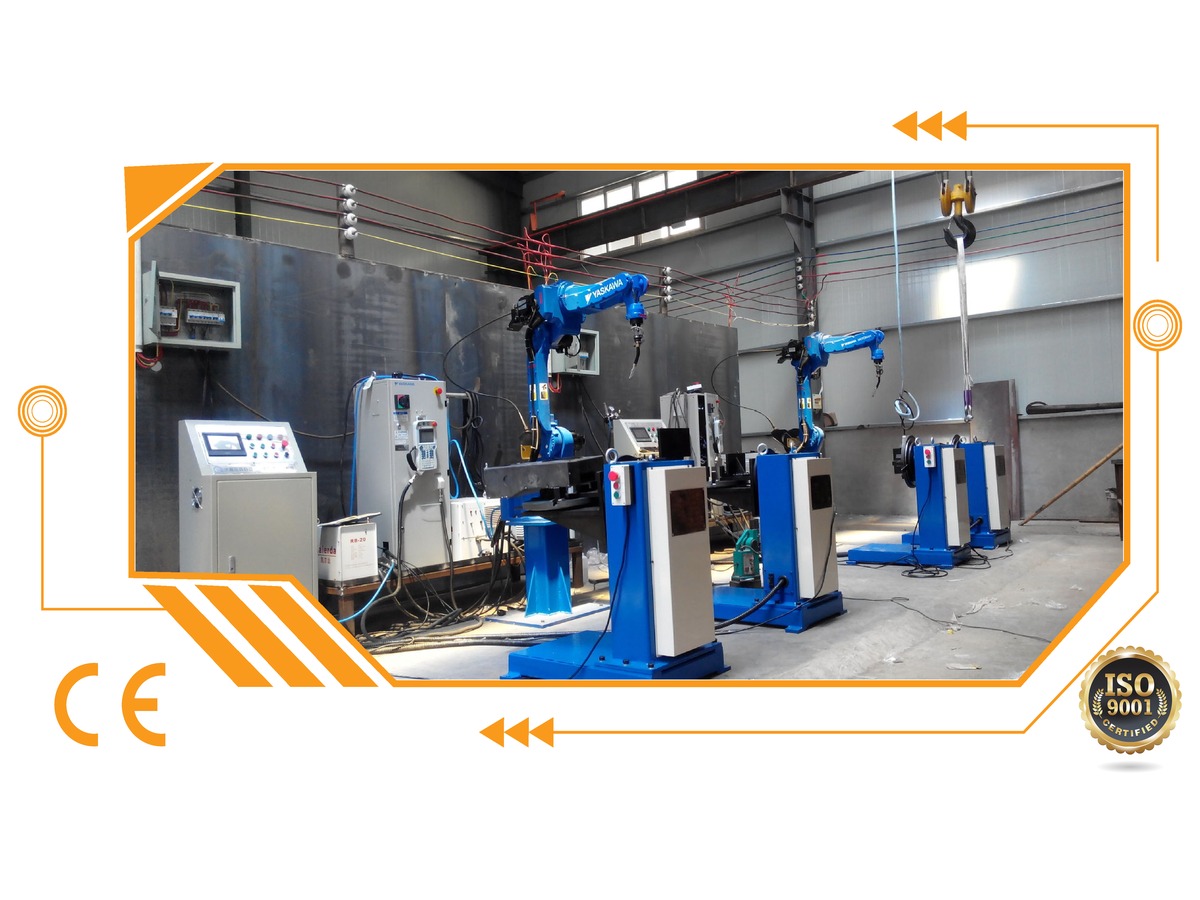
But here’s the challengeânot all robotic welding solutions are created equal. Traditional robotic welding systems, designed decades ago for high-volume, low-mix production environments, simply weren’t built for the dynamic needs of today’s manufacturers.
The Traditional Robotics Problem
For manufacturers producing varied parts in low to medium volumes, traditional robotic welding creates more headaches than it solves. These systems demand extensive programming, constant adjustments, and specialized laborâall while lacking the flexibility needed to adapt to real-world manufacturing conditions.
The result? Hundreds of thousands (or even millions) of dollars in upfront investment with no guarantee of success.
A Smarter Approach to Robotic Welding
Modern AI-powered welding systems take a fundamentally different approach, leveraging artificial intelligence and computer vision to solve the challenges that have long plagued traditional robotic welding.
Simple, Intuitive Setup
Traditional systems require hours or even days of tedious programming with teach pendants or offline programming software for each new part.
Modern AI welding systems make setup incredibly simple with intuitive intuitive job setup software software. Just click the seams and assign weldsâthe system figures out the rest. No complex programming, no teach pendant, no offline programming software required.
Automatic Adaptation to Real Parts
Traditional systems struggle with the reality of manufacturing: parts don’t always match their CAD models perfectly. Loose fit-up tolerances and deteriorating tooling create an endless cycle of point touch-ups and adjustments.
AI-powered welding systems adjust path plans automatically based on the actual joint location of each individual part. The cells identify the seam and adapt to the part in front of the robot, not some theoretical CAD model. There’s no need for touch-ups.

AI-Powered Quality Learning
Traditional systems have no ability to learn or improve over time. What you buy is what you’re stuck with.
Modern systems use real-time feedback and post-weld inspection to continuously feed AI technology, providing consistently optimal weld quality that improves with every part.
Dramatically Reduced Labor Requirements
Traditional systems typically require three specialized personnel: one Process/Weld Engineer, one Programmer, and one Cell Operator.
AI-powered welding systems are designed so anyone can run a welding cell. No specialized programming or engineering expertise requiredâjust standard welding operation knowledge.
Risk-Free Implementation
Traditional systems demand massive upfront capital investmentâhundreds of thousands or even millions of dollarsâwith no guarantee the solution will work for your specific application.
Robots-as-a-Service (RaaS) subscription models offer no upfront costs. You won’t see a bill until the cell has proven itself with successfully welded parts. Plus, you have the flexibility to scale up and down as your needs change.
With RaaS, there’s no risk of obsolescence. The service provider handles all updates and maintenance, ensuring cells are always running at peak performance. This means the provider is ultimately invested in your successâthey only succeed when you succeed. Your productivity is their priority.
Continuous Improvement
Traditional systems are static. What you buy is what you get.
Modern AI welding solutions deliver ongoing software upgrades and feature enhancements at no additional cost. Your robot will only get smarter over time.
Built for High-Mix, Low-to-Medium Volume Manufacturing
Traditional welding automation was designed with speed in mind, expecting near-perfect fit-up parts from highly controlled upstream processes. Unless you’re an automotive OEM, that just isn’t reality. Real manufacturing is messier: parts have variation, tolerances shift, fixturing wears over time.
Today’s successful shops need flexibility, not just speed. They need systems that handle variety without requiring a programmer for every new partâtechnology that adapts to real-world conditions, not theoretical CAD models. For manufacturers dealing with diverse product lines and varying production volumes, legacy high-volume, low-mix systems simply can’t deliver the flexibility required to stay competitive.
AI-powered welding automation was purpose-built for this reality, giving you the productivity benefits of robotics without the limitations that have held back traditional systems.
Bridging the Welder Shortage
The skilled welder shortage isn’t going away. In fact, it’s only getting worse. The question isn’t whether to automateâit’s how to automate intelligently. A smarter, more flexible approach to robotic welding is designed specifically for the challenges facing high-mix, low-to-medium volume manufacturers. With no upfront costs, intuitive job setup, and continuous AI-driven improvements, manufacturers across North America are solving their welder shortage while improving quality and throughput.